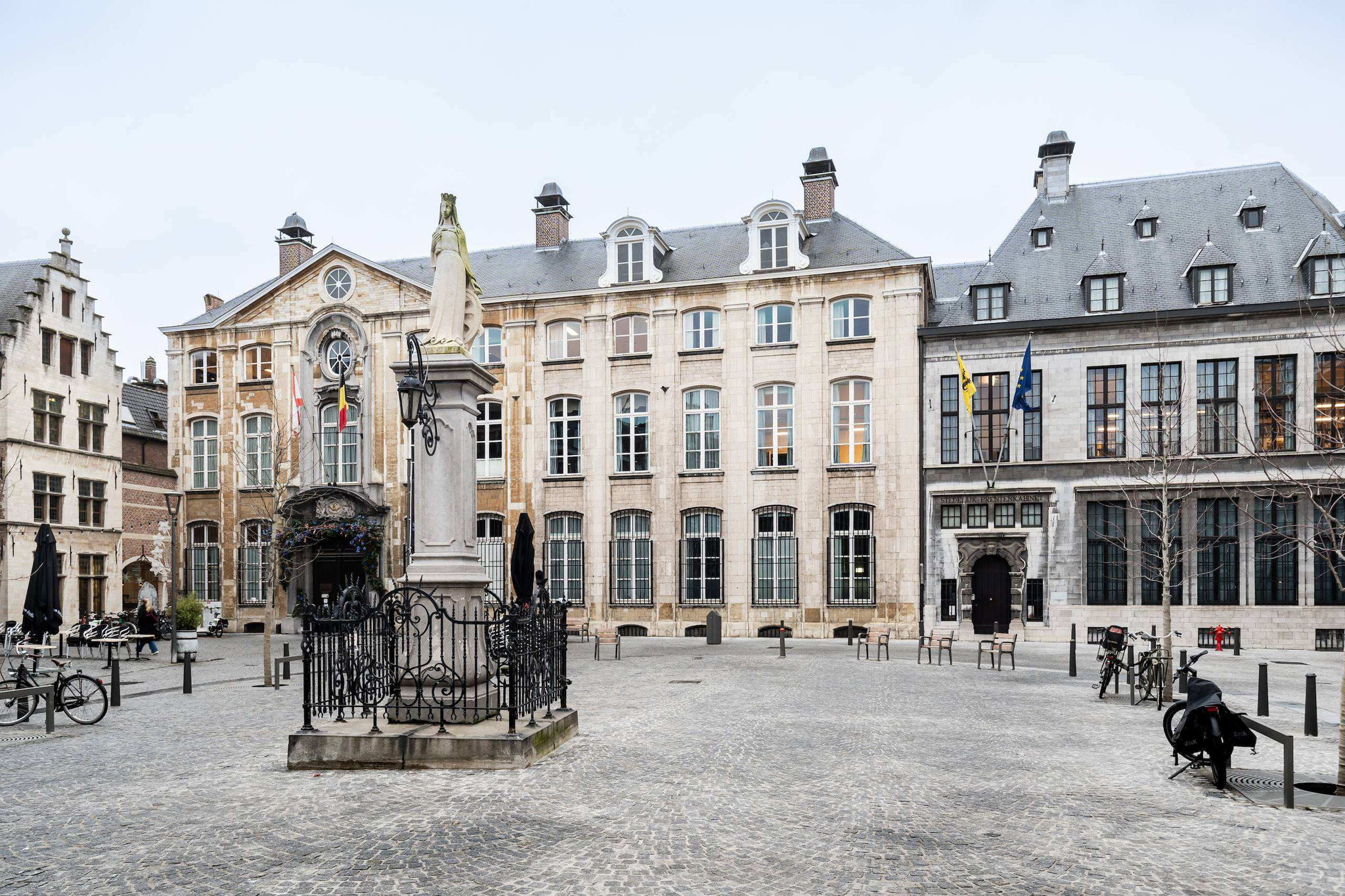
PRESS KIT: MUSEUM PLANTIN-MORETUS CELEBRATES 150 YEARS AS A MUSEUM AND 450 YEARS OF PRINTING
The very first museum on the UNESCO World Heritage List is turning 150. However, it is much more than a museum. This is an imposing house where nine generations of the same family of printers lived and worked: the Plantin-Moretus family. Pioneers of the printing press. Their residence and the 450-year-old printing works attract more than one hundred thousand visitors each year. From December 2026, you can relive history more vividly than ever before, thanks to a renewed museum route and a brand-new interactive visitor app that places the experience of the house itself centre stage. The Museum Plantin-Moretus is celebrating this new chapter, and its double anniversary, with a house-warming party for the general public.
Museum Plantin-Moretus
Today it's a museum, but in 1576 the house in Vrijdagmarkt was where Christoffel Plantin and Jeanne Rivière established both their family home and printing business, the Officina Plantiniana. Eight more generations of men and women followed them, as the book business brought them worldwide renown. This success was thanks to their innovative ideas, such as the use of high-quality typefaces (for example, Garamond), thoughtful design, rich illustrations, and a diverse publishing catalogue. In 1876, nine generations and three hundred years later, Edouard Moretus sold the Officina to the city of Antwerp, and the illustrious printing house became a museum.


© images: Lucid
Renewed scenography
In 2026, the museum is celebrating its 150th anniversary. Time for a new chapter. Redesigned scenography by architect Koen Bovée and dramaturge Gerry De Mol welcomes you into the home and printing works of the Plantin-Moretus family. With a combination of a visitor app, and carefully selected projections and screens, the former inhabitants themselves guide you through the space. They tell the stories of their family, the business, and the books. Objects and personal stories create an additional sense of domestic intimacy, and in various areas you can roll up your sleeves and get hands-on.


What can you do, and when? It's entirely up to you. With the tailor-made app, you can determine your own route through the museum. Prefer a more traditional visit? A guidebook and a refreshed range of guided tours remain available. On the ground floor, Plantin’s daughter Martina and grandson Balthasar take you through the elegant private quarters and the bustling workspaces of the family business: from the printing shop to the proofreading room, and from the type room to the bookshop. The result of all that painstaking labour can be admired on the first floor, where you will be truly dazzled by the vast collection of books once produced by the printing house.
You will also gain deeper insight into the social, political, and cultural world of the time. That covers both the grand narratives and the smaller stories, and how they are still relevant today. How did an early modern family business operate? How did Antwerp become an international centre of printing? How did the Officina Plantiniana respond to the deeply human search for meaning? What role did Plantin’s printed works play in how we communicate today, across linguistic and cultural boundaries? What did Plantin sell under the counter that was not meant to see the light of day? And what role did the Plantin-Moretus family play in spreading knowledge across the world?


© all images: Lucid
One of the greatest printers of his time
Labore et Constantia – labour and perseverance – was Plantin’s motto. Thanks to all that hard work, and a shrewd business head, Plantin became one of the greatest printers of his time. His Officina Plantiniana quickly became the preferred address for scholars, humanists, and monarchs. Rubens was a childhood friend of Plantin’s grandson Balthasar I Moretus, and painted the family portraits. Lobelius, Dodoens, and Clusius had their influential botanical works published here. The development of medicine received a major boost thanks to Plantin’s Dutch edition of the anatomical work by the Spanish physician Juan Valverde de Amusco. The first modern world atlas by Ortelius, the eight-volume Biblia Regia in five languages for King Philip II of Spain… some of the most influential and historic works left these presses.
The story of the first three generations captures the imagination. The Plantins, their children, and grandchildren pulled out all the stops to bring their business to the top. They succeeded too, thanks to bold entrepreneurship, smart decision-making, political manoeuvring, and carefully calculated marriage strategies.
From the 19th century onwards, however, it became increasingly difficult to keep the family business afloat. Exactly 300 years after its founding, the last descendant, Edouard Moretus, closed the doors of the printing house behind him. In 1876, he sold the site and its entire contents to the City of Antwerp. The City opened the house and its collection to everyone: the Museum Plantin-Moretus was born. For decades, it attracted visitors from across the globe, eager to explore the history of printing and the lives of this renowned family. They admired the perfectly preserved living quarters, a library with thousands of books, the authentic bookstore, and the only pre-industrial printing-publishing house in the world still furnished.
In addition to the complete family archive, more than 1,250 significant objects from the collection are listed as Flemish Masterpieces. These include works by Rubens and Jordaens, remarkable maps by Mercator, a 9th-century manuscript by Sedulius, and the oldest original printing presses in the world. The exceptional heritage value of the collections and the site was recognised in 2005 with UNESCO World Heritage status. As a holder of the Blue Shield, the museum is even protected in the event of armed conflict. Only 29 other sites worldwide have this status.


© alle images: Lucid
Open house in style
Even those who are not fond of books are in for an unforgettable experience at the renewed Museum Plantin-Moretus. To complete this meticulous transformation, the museum will close its doors for four months from 3 August. On 5 and 6 December, it will reopen with a housewarming celebration in a 16th-century atmosphere. Mark that weekend in your diary, and (re)discover how the stories of this family and this house are more relevant than ever.
City of Antwerp | Press & PR